



The Stars and Stripes newspaper reported that growing concerns about attacks by terrorist groups, especially ISIS, in West Africa and the complicated situation in Somalia have prompted the Pentagon to review its Africa strategy.
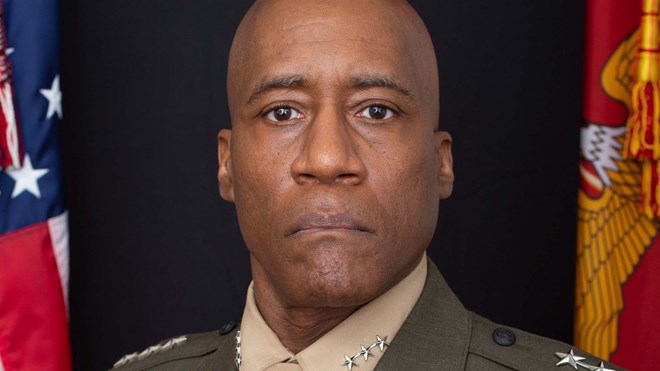
The commander of US Africa Command (AFRICOM), General Michael Langley, said that terrorist groups operating in the Sahel region have grown rapidly over the past three years. He warned that if nothing is done to address these groups, they could soon gain the ability to carry out attacks on the United States.
Although General Langley did not explicitly say that the United States is reducing the number of its troops in Africa, he stressed that the responsibility for providing security must be fully assumed by African forces.
“Our strategy is built on cooperation. It is a shared goal to ensure the security of our countries and those of our friends,” he said. “It’s about building sustainable capacity, not dependency. It’s about investing in Africa’s capacity to solve Africa’s problems.”
General Langley, a U.S. Navy veteran who will lead AFRICOM in 2022, said the Sahel region has now become the “epicenter” of terrorism in Africa. He said al-Qaeda and ISIS are active in Burkina Faso, Mali, Niger, and Nigeria.
“One of the new goals of terrorist groups is to gain access to the coasts of West Africa,” Langley said, speaking to reporters.
He also said that this situation could significantly increase the risk of attacks on American shores.
“We have lost the ability to closely monitor the activities of terrorist groups,” he said.
Last Friday, General Langley met with African military commanders in Nairobi, Kenya, for a conference on the security situation in Africa.
Speaking about Somalia, Langley said that AFRICOM has doubled the number of airstrikes it has carried out there this year. He noted that more than 25 strikes have been carried out, more than the number from all of last year.
However, he stressed that lasting success cannot come from military power alone, but requires a comprehensive strategy that addresses the root causes of instability.