




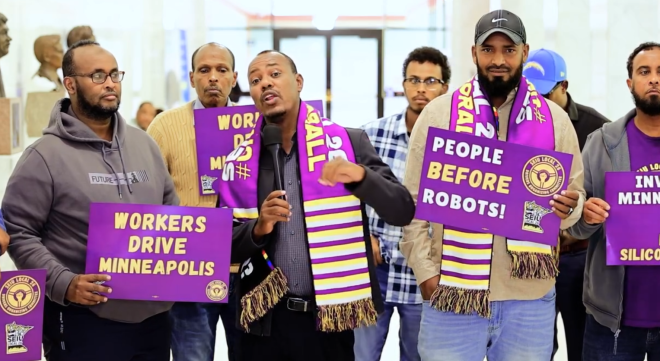
Somali drivers working for Uber and Lyft in Minneapolis, Minnesota, have expressed serious concerns regarding the use of autonomous vehicles in ride-hailing services.
Drivers and labor organizations have stated that if driverless vehicles are permitted to fully transport passengers, it could jeopardize the livelihoods of thousands of drivers who rely on Uber and Lyft for their income.
The debate intensified following trials conducted in Minneapolis by Waymo, a company specializing in autonomous vehicle technology.
A proposed local ordinance stipulates that autonomous vehicles used for commercial services must have a licensed driver present who is capable of taking control of the vehicle when necessary.
Proponents of the measure argue that this requirement is essential for protecting drivers’ jobs and enhancing road safety, whereas Waymo opposes such mandates.
One of the Somali drivers who spoke at the meeting noted that drivers are an integral part of the city’s economy and provide a vital service that supports their families. He noted that drivers face challenging conditions—including accidents and work-related expenses—yet their work provides a livelihood for many families.
Drivers also pointed out that the issue extends beyond just Uber and Lyft; the widespread adoption of autonomous vehicle technology could impact other jobs in the future.
Jamal Osman, an elected official representing a Minneapolis district, stated that this issue could particularly affect the city’s large number of drivers.
He warned that if autonomous vehicles were permitted to fully take over the work currently done by drivers, the need for the thousands of people who rely on this job could disappear.
“We are trying to prevent thousands upon thousands of people from facing unemployment,” he said, highlighting that many drivers depend on this work to support their families.
Waymo has not yet fully launched its driverless passenger service in Minneapolis, though the company is conducting trials involving autonomous vehicles in the city.
This issue is of particular importance to Minnesota’s Somali community, as many Somalis work for ride-hailing services like Uber and Lyft. Debate on the initiative is expected to continue over the coming weeks as the city council deliberates on the regulations governing autonomous vehicles and how they can be integrated into public transport services.