

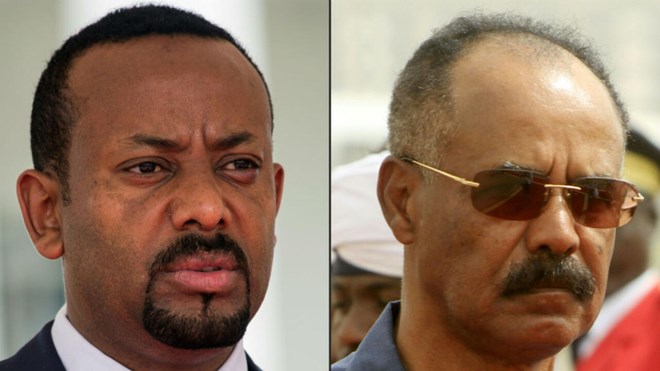
Tensions in northern Ethiopia have flared up again, less than three years after a peace deal in Pretoria ended a two-year civil war in Tigray. A new report by DW has revealed that Eritrean troops are secretly supporting armed groups fighting inside Ethiopia, raising fears among residents that a new war could break out.
Residents of Mekele, the capital of Tigray, say they live in fear and uncertainty. “We can’t plan anything, we’re just waiting for a new war to break out,” said a local woman. The high cost of living and shrinking job opportunities have made life difficult for locals, who are increasingly relying on complete peace to build a new life.
In the previous war, which rocked the region, Eritrean troops supported the Ethiopian government led by Prime Minister Abiy Ahmed, in its fight against the Tigray People’s Liberation Front (TPLF). But the Pretoria Agreement that ended the war did not include the Eritrean government, which angered the Asmara government, and there are fears that Eritrean forces are arming rebels opposed to the Addis Ababa government.
Tigray region is facing internal political problems. The TPLF, once the dominant force in the region, is now facing divisions. General Tadesse Werede, a former commander of the Tigray Defense Forces (TDF), has been appointed as the head of the interim administration of the region. Denying reports of an impending war, he said that there will be no war from the Tigray side.
Meanwhile, the TPLF Chairman, Debretsion Gebremichael, has been accused of having links with Eritrea, although he has strongly denied this. He has called on the international community to put pressure on the federal government of Ethiopia to avoid new tensions. The dispute between Werede and Gebremichael could lead to an undeserved conflict.
According to Gerrit Kurtz of the SWP Institute for International Security Studies, Eritrea sees political and security benefits in Ethiopia becoming a country with internal conflicts. He said Eritrea supports Ethiopian armed opposition groups such as the Fano rebels fighting in the Amhara region.
Fighting between Fano and federal forces in March left more than 300 people dead, with Asmara accused of involvement. This shows how Eritrea is using local groups to undermine the Ethiopian government.
According to a report published by the US-based The Sentry, Eritrea has been widely accused of looting Tigray’s assets during the previous war. Gold, sesame, traditional arts and even people have been smuggled out of the region, with the assets being sold on international markets to finance Eritrean operations inside Ethiopia.
The report also said that Eritrea
has been buying weapons from countries including Russia, after a UN arms embargo was lifted in 2018. Eritrea’s Information Minister, Yemane Ghebremeskel, described the report as a “fabricated narrative” aimed at blaming Eritrea for the region’s problems.
Prime Minister Abiy Ahmed, meanwhile, has been accused of using tactics to undermine all opposition groups so that they do not unite and threaten his rule. This has led him to occasionally make deals with certain groups, while pressuring others.
There are also fears that Abiy will exploit the Tigray crisis to campaign for national elections next year. He has also revived the debate over Ethiopia’s need for sea access, which has led to a diplomatic row with Somalia, and many fear this could lead to a new war in the region.