




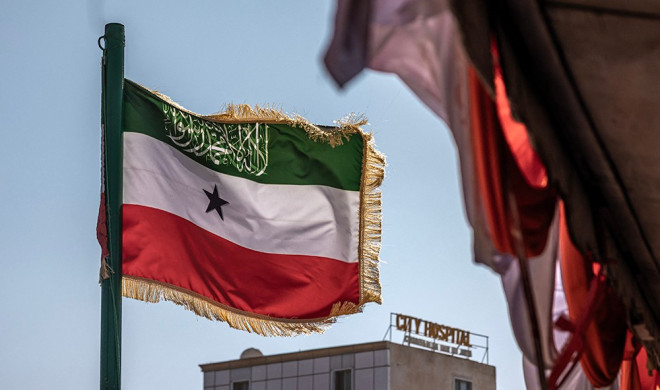
A report by The Times shows how tensions in the Middle East, particularly the involvement of the Houthis in the Red Sea crisis and the region, have once again highlighted the geopolitical importance of Somaliland.
The report says that Iran-backed Houthi fighters fired a missile at Israel for the first time last week, and also warned of the possibility of blocking the Bab al-Mandeb Strait. This waterway, which connects the Gulf of Aden and the Suez Canal, is a vital route for global trade.
While the world’s eyes are focused on the Strait of Hormuz, Bab al-Mandeb has become another area of increasing danger, especially with the Houthis having the ability to close it.
The report points out that Somaliland, although not officially recognized, fully controls a significant part of the coastline around this waterway, making it a strategically important location for regional security and international trade.
The port of Berbera is described as Somaliland’s biggest asset, and is operated by DP World. The Berbera airport, which has a long runway, also highlights the importance of the coast to the military interests of world powers.
The report noted that the United States is studying the possibility of establishing a military base in Berbera, while Israel is interested in finding a place to monitor the activities of the Houthi movement in Yemen. This indirectly indicates that Somaliland is seen as an important security partner.
However, there are concerns within Somaliland, especially among the people of Berbera, who fear being drawn into the regional conflicts. Somaliland, which has long enjoyed peace and stability, wants to avoid being used as a staging ground for foreign powers, as The Times noted.
The Times report concludes that the new tensions between the Houthis and the Red Sea have heightened the importance of Somaliland, and have revived the debate over its international recognition.