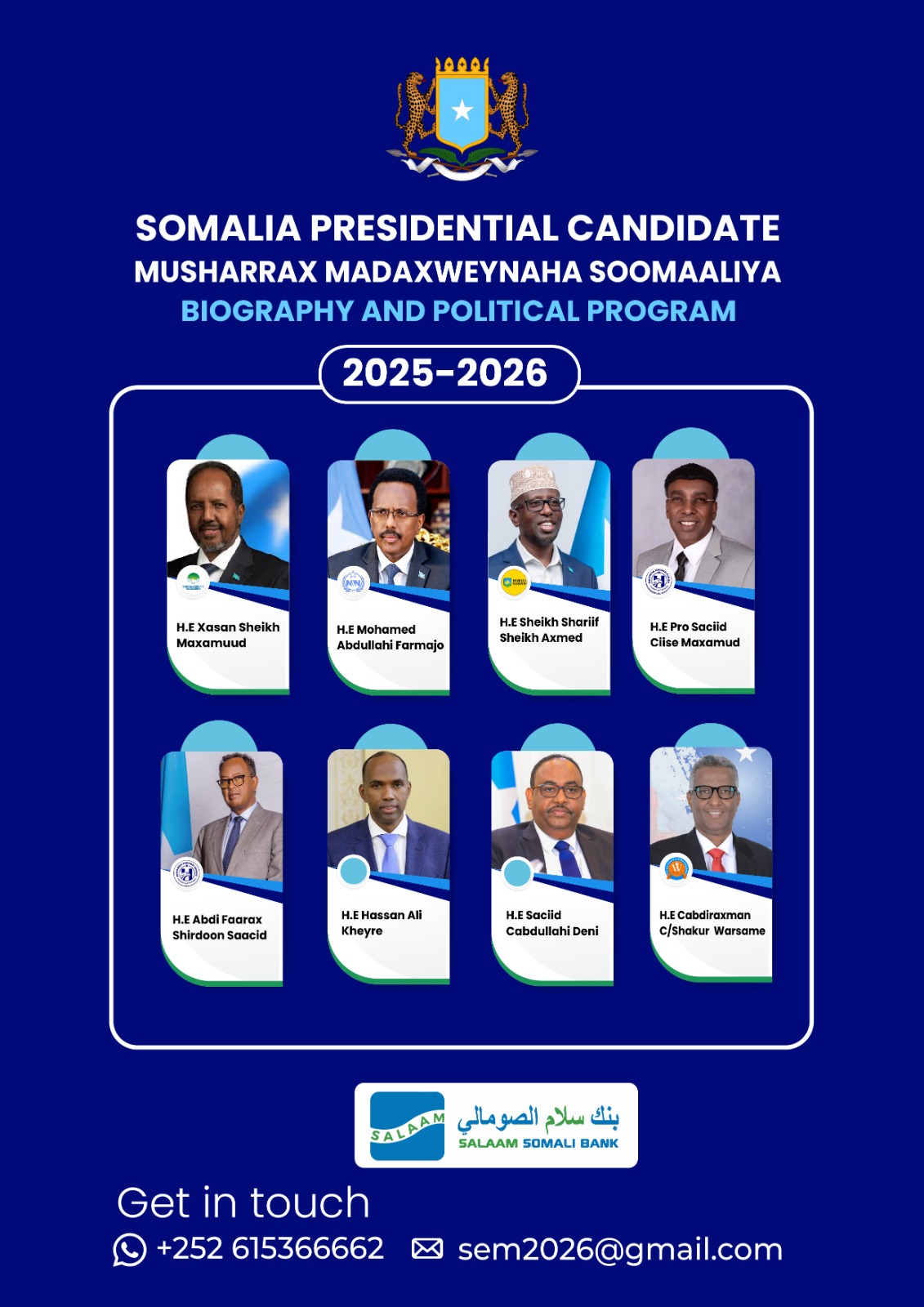



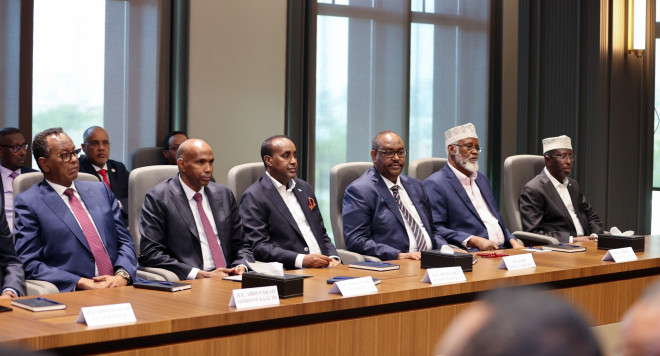
The Somali Future Council announced in a press release that its negotiations with the Federal Government of Somalia have ended inconclusively, after days of talks.
The council said that it entered into the talks in good faith and out of national responsibility, to find a solution to the difficult situations in the country, such as severe drought, political divisions, economic pressures and the impact of global changes. It also said that it wanted to prevent political uncertainty and ensure a negotiated and timely electoral process before the end of the term of the constitutional institutions.
The Future Council accused the government of continuing to unilaterally amend the constitution, while also accusing the government of denying the participation of more than 50 members of parliament in parliamentary sessions, and of using intimidation and security threats. The Council also said that its members were pressured on security and political issues, and that defamatory reports were published in the media.
Major points of disagreement
The Future Council insisted that the 2012 interim constitution is the legal basis of the country, and its amendment requires a national agreement and genuine public consultation, while maintaining the balance of federal powers. Meanwhile, the Federal Government insisted that the amendment would not be stopped for anyone.
The Council also demanded that the early elections in the states be held in accordance with their constitutions and federal principles, while the government wants these elections to be based on the amended constitution and brought under the control of the Federal Election Commission.
Another controversial issue, they said, is that a political agreement be reached before April 14 on the process, schedule, and administration of the Federal Parliament elections. The council called for a transparent, inclusive, and more representative electoral process than the previous ones, while the government proposed that the committee be advisory only and have no decision-making power.
Council’s decision
The Future Council made it clear that it would not allow what it described as “a constitutional amendment, a forced election or an extension of the term,” saying that its responsibility is to defend the constitution, the federal system and a legitimate and negotiated election.
Finally, the council said it remains ready for genuine and fruitful dialogue, to reach an electoral agreement before the end of the term of the constitutional institutions, and to stop unilateral steps to change the constitution.
Somali Future Council says negotiations with the Federal Government have ended inconclusive
Somali Future Council says negotiations with the Federal Government have ended inconclusive
More News.