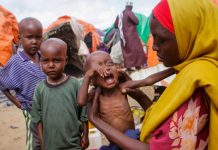

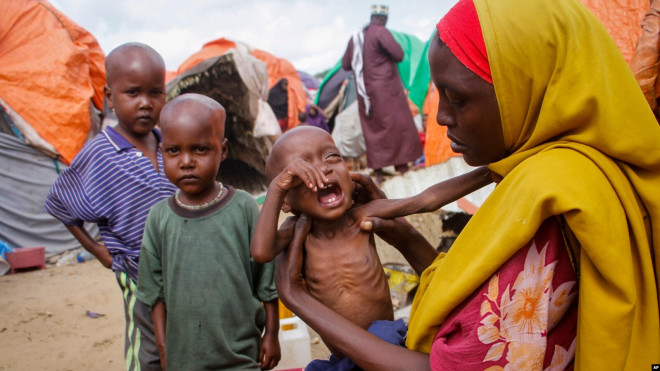
A Somali mother undertook a three-day, nearly 90-kilometer journey with her three-year-old daughter to reach a hospital in Kismayo after the child’s health deteriorated and no medical services were available in their local area.
The Associated Press (AP) reported that the mother, Halima Abdullahi Ibrahim, brought her daughter, Asho Hassan Abdi, from their village; the child was visibly suffering from bodily swelling. Upon their arrival at Kismayo General Hospital, medical staff admitted the girl to the ward treating children with severe malnutrition.
Doctors identified the swelling as a symptom of severe malnutrition—a life-threatening condition for children, particularly when they lack immediate medical treatment and adequate nutrition. An AP report states that approximately 1.92 million Somali children aged between six months and nearly five years are suffering from, or are expected to face, acute malnutrition through June 2027. This figure includes nearly 433,000 children expected to experience severe acute malnutrition, a condition that poses a grave threat to their lives.
Somalia is among the areas most severely affected by this crisis, which is exacerbated by food shortages, infectious diseases, a lack of sufficient access to clean water, and the inaccessibility of health services for many communities. There are also concerns regarding anticipated floods linked to the El Niño phenomenon, which could displace more families and hinder access to healthcare and aid.
Ismail Gaaras, the Health Minister of the Jubbaland administration, told the AP that the severe malnutrition treatment center at Kismayo Hospital admitted 152 children in August, four of whom died. Meanwhile, Sandra Lattouf, the UNICEF Representative for Somalia, warned that children are dying from malnutrition, with other diseases—such as measles—further exacerbating the risk.
The report also noted that a decline in funding for humanitarian agencies has hampered efforts to address the situation. Many displaced families living in areas near Kismayo reportedly lack adequate aid, placing an increased burden on health centers and facilities supporting malnourished children.
Aid agencies and UN officials have called for strengthened collaboration among health workers, local authorities, community leaders, and humanitarian organizations to deliver essential services to vulnerable children and families. The long journey this mother undertook to save her daughter illustrates the challenges families in rural Somalia face in accessing urgent medical care.