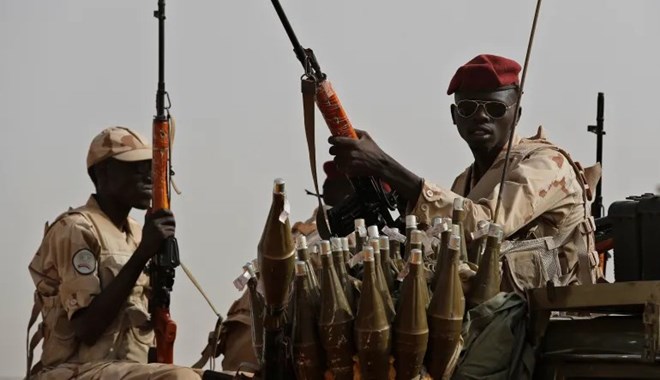
A political group led by the Rapid Support Forces (RSF) in Sudan has announced the formation of a new government to challenge the military government in Khartoum, saying the new government will usher in a new future for a democratic, secular federal state.
The group, which calls itself the Leadership Council of the Sudan Solidarity Coalition (TASIS), said RSF leader Mohamed Hamdan Dagalo “Hemedti” would be the chairman of a new 15-member presidential council, including regional governors.
According to an official statement issued by TASIS, Mohamed Hassan Osman al-Ta’ishi will be the prime minister of the new government.
“We are delighted with this historic victory, and we extend our greetings and congratulations to the people of Sudan who have endured the ravages of war for so long,” the TASIS statement said.
“We reaffirm our commitment to building a new united country, based on equality, freedom, justice, and a federal system that is not coerced and not based on any particular religion.”
The new government risks further dividing the country, as fighting between the RSF and the Sudanese Armed Forces (SAF) continues, with each party trying to claim its own legal authority.
A few days ago, government forces said they had completely driven the RSF out of Khartoum.
The RSF still controls large areas of territory, particularly in the western Darfur region, where the humanitarian situation has deteriorated, with the RSF besieging the town of El-Fasher, causing widespread hunger and fear.
Human rights groups have accused both sides – the RSF and the SAF – of committing serious abuses against civilians. Amnesty International has previously said that the RSF uses rape and sexual violence to subjugate people, take over areas and suppress society.
This year, the United States imposed sanctions on Hemedti, accusing him of being responsible for serious crimes including extrajudicial killings and denying humanitarian aid.
Sudan has been mired in political turmoil since President Omar Hassan al-Bashir was ousted in 2019 following a popular uprising. In October 2021, the military led by Abdifatah al-Burhan staged a coup against the civilian government, leading to the resignation of then-Prime Minister Abdallah Hamdok.
Although Hemedti and Burhan initially ruled the country jointly after the coup, they switched sides in April 2023, sparking a serious conflict that continues to this day. Although the conflict between the two is not based on different political views, efforts to end the conflict have not yet been successful.
Sudan today appears to be a country divided by factions, with fears of two governments, each claiming to be the rightful one, while the Sudanese people struggle with conflict, displacement, hunger, and constant oppression.