

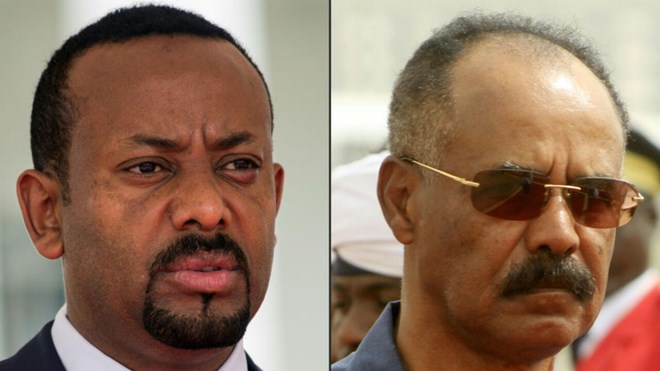
Eritrean President Isaias Afwerki has warned Ethiopia against attempting another war in his country, saying it would be a regrettable dream. The comments come as tensions between the two countries continue to rise.
Eritrea and Ethiopia have had a tense relationship since Eritrea gained independence from Ethiopia in 1993, with repeated clashes between the two sides. The 1998-2000 war was the worst, killing tens of thousands.
Tensions have now flared again. Eritrea has accused Ethiopia of seeking access to the sea.
Speaking to the national broadcaster Eri-TV, President Isaias made it clear that Ethiopia would not be able to defeat his country if war broke out, saying that despite Ethiopia being a very populous country, it could not challenge his country: “If Abiy thinks he can defeat Eritrea with a large population, he is thinking wrongly,” he said.
He continued: “Before the Ethiopian people are dragged into another unnecessary war, or used for political gain, it is necessary to first resolve the internal problems of the country.”
President Isaias described Ethiopian Prime Minister Abiy Ahmed’s actions as “dangerous” and “a way to divert public attention from the internal pressures he is facing.”
The two countries signed a peace agreement in 2018 after Abiy Ahmed took power, and Eritrean forces provided support to Ethiopian forces during the Tigray War between the Ethiopian National Defense Forces and TPLF forces, with the two countries showing close ties at the time.
Eritrean forces committed atrocities in the region at the time, including extrajudicial killings, looting, rape and other abuses against civilians, with the Ethiopian government’s approval, but the rift between Asmara and Addis Ababa has resurfaced following an agreement between the Ethiopian government and the TPLF, to which Eritrea is not a party.
The tension between Eritrea and Ethiopia is rooted in a long history of distrust and conflicting interests. After Eritrea gained independence from Ethiopia in 1993, a territorial dispute arose along the border between the two countries. Although an international court ruled that the disputed Badme area belonged to Eritrea, Ethiopia refused to withdraw, fueling anger and political suspicion on both sides.
In recent years, Ethiopia’s maritime ambitions have become another source of tension. Abiy Ahmed has made it clear that his country needs the sea for development, although he has said that his ambitions are peaceful. However, Eritrea sees these statements as threats aimed at indirectly pressuring it to accept Ethiopia’s ambitions, which it strongly opposes.
Eritrea, a totalitarian state, is regularly criticized for human rights abuses. The country ranks last in the world for press freedom, according to Reporters Without Borders. Ethiopia itself is a country with a poor record in protecting freedoms, and successive governments have committed inhumane acts against its citizens.