




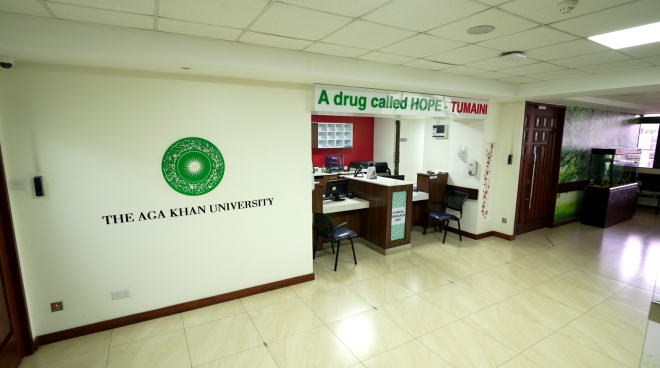
When you enter the Aga Khan University Hospital Nairobi (AKUH), you are immediately struck by an atmosphere of innovation, precision, and modern medical optimism. Journalists from Somalia, Ethiopia, Nigeria, and the Democratic Republic of Congo spent three days on a special media tour of the hospital, getting a first-hand look at one of Africa’s leading medical facilities.
The visit began with a meeting with the hospital’s leadership, who explained the mission of AKUH, which is to provide world-class healthcare that reduces the need for Africans to travel to other countries for highly specialized treatment.
The director of AKUH Nairobi, Rashid Khalani, said the hospital is under the Aga Khan Development Network (AKDN), and is a private, not-for-profit organization.
“There is no profit to be distributed to shareholders. Any surplus will be invested in technology, training, and quality of care. Our vision is a health environment that ensures quality, and access to comprehensive services,” he said.
AKUH Nairobi Hospital CEO, Rashid Khalani
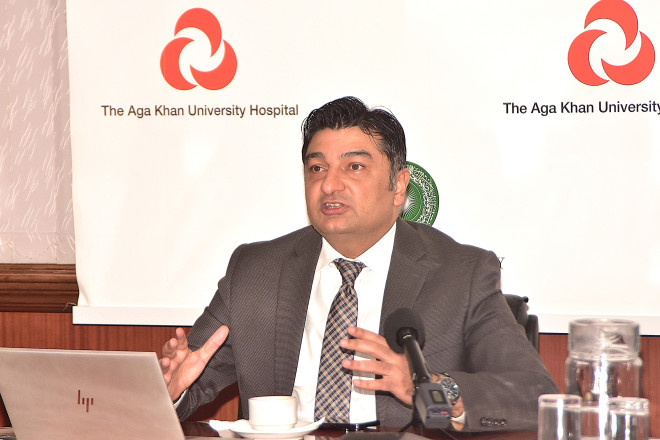
AKUH Nairobi Hospital Director, Rashid Khalani
In the operating room, reporters saw many rooms where complex surgeries are performed, such as cancer surgery, organ transplants, pediatric surgery, and heart surgeries. Doctors, professors, nurses, and radiologists work together in an integrated manner to ensure patient safety.
The reporters then moved on to the cardiac catheterization laboratory (Cath Lab), where complex procedures related to heart and blood vessel problems are performed. The room is equipped with modern equipment that takes detailed images and is capable of treating patients without open surgery. Services offered in this department include angioplasty, stent placement, and cardiac rhythm correction.
Another important area was the treatment of cancer-related conditions. The radiotherapy and chemotherapy departments demonstrated AKUH’s commitment to modern care for cancer patients, providing personalized treatment plans, tumor-targeted radiotherapy machines, accurate PET-CT scans, and other state-of-the-art equipment.
The Aga Khan University Hospital (AKUH) in Nairobi was the first facility in East and Central Africa to introduce PET-CT technology, which produces advanced imaging for the diagnosis of cancer, heart and brain conditions including the unique PSMA-PET CT for prostate cancer.
The hospital has two Cathlabs, and offers a range of state-of-the-art services such as Nuclear Medicine (SPECT CT), Linear Accelerators (LINACs), MRI, CT-Scan, neuro-navigation, mammogram, PCR Biofire, MALDI-TOF, among others.

PET CT and Cyclotron machines
Pathologists and laboratory staff showed reporters how samples from Kenya and neighboring countries are processed, from blood tests to cancer diagnosis. Reporters witnessed first-hand molecular testing, advanced imaging, and tissue analysis, gaining insight into modern cancer diagnosis procedures.
Surgical services include breast surgery, cardiothoracic, ENT, neurosurgery, ophthalmology, spine, urology, pediatric surgery, plastic surgery, and physiotherapy.
Prof. Shaheen Sayed, Chairman & Director of the Department of Oncology and Consultant Oncologist at AKUH, and Prof. Geoffrey Omuse, Specialist in Oncology at the Department of Oncology, AKUH, detailed the hospital’s laboratory capabilities and cutting-edge technology, especially its cancer detection capabilities.
“We have the most advanced equipment in all the laboratory departments. If you visit the chemistry department, you will see the latest equipment. Also, the pathology and hematology departments have the most advanced equipment here. We are a referral center,” said Prof. Shaheen Sayed.
Prof. Geoffrey Omuse added: “We operate at the same level as any laboratory in the United States. We have the same accreditations as American hospitals, and we are fortunate to have American inspectors come to us every two years to assess the quality of our testing. In terms of quality, we are at the top. We don’t just serve AKUH; we serve the entire region. Our laboratory is the largest here, but it also supports 54 other AKU laboratories across the region.”